
News & Inspiration
How to Plan Shared Living Spaces So Everyone Feels at Home
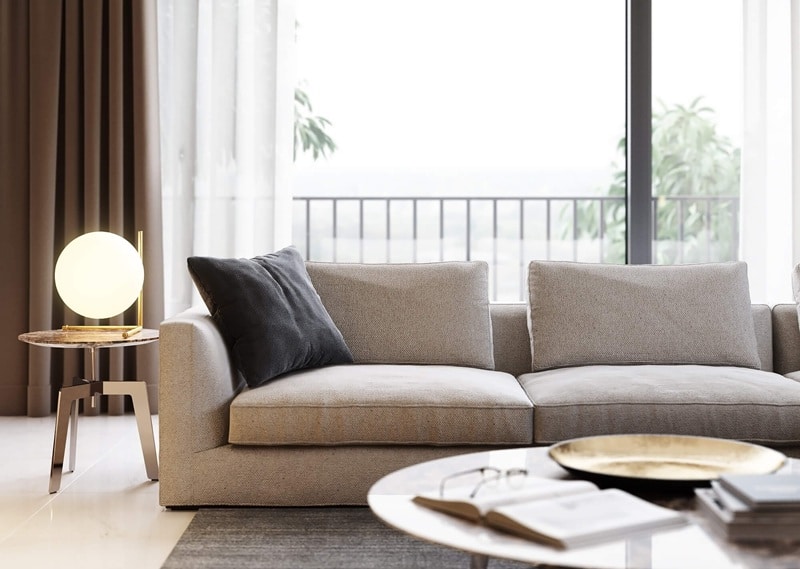
Most people preparing to move into a house share spend a lot of time thinking about who they will be living with. That makes sense. Compatibility matters. But there is a practical side to shared living that often gets less attention before the move-in date: whether the home itself is actually set up for more than one person.
Storage that makes sense for two people. A living room that can be used for company on some evenings and for quiet on others. A kitchen where nobody is constantly rummaging through the wrong cupboard. These things seem minor until they become daily friction points — and once they do, they are surprisingly hard to separate from how you feel about your housemate.
Getting the space right is not a substitute for finding compatible people. But it does make compatible people easier to live with.
Why Shared Spaces Need More Thought Than Solo Living
Living alone is the easiest possible arrangement in one specific way: the home adjusts to you. Over time, without thinking about it, everything ends up roughly where it makes sense for your routines. Your coffee is where you reach for it. Your shoes are where you tend to leave them. Nobody else is putting things somewhere different or needing the bathroom at the same time as you.
Sharing changes all of this. Not because either person is doing something wrong — just because two routines running through the same physical space will collide sometimes. The question is whether the space has been thought through enough to absorb those collisions, or whether they keep happening in the same spots.
A kitchen with no clear system for whose food goes where will be a minor source of irritation almost every day. A shared living room with only one mode — television on, everyone together — gives anyone who wants a quiet evening very little choice. These are not personality clashes. They are layout problems.
Start by Agreeing What the Shared Space Needs to Do
Before changing anything or buying anything, it helps to have a direct conversation about how the shared rooms are actually going to be used. Not in abstract terms, but practically: when does each person typically use the kitchen, the living room, the bathroom? What does a normal Tuesday evening look like for each person? A normal Saturday morning?
Relaxing and spending time together
Some households want to spend most evenings in the same room. Others prefer to be largely separate and come together occasionally. Both work fine — but a living room set up for one of those patterns will not naturally support the other.
If the main seating is a single large sofa pointed at the television, there is no obvious place to sit if you want to be in the same room as your housemate but not really interacting with them. Adding a chair slightly apart from the main seating, or a small reading corner, does not require much space — but it gives people somewhere to be without the choice being either full social engagement or disappearing to their bedroom.
The kitchen
Shared kitchens accumulate confusion faster than most people expect. Within a few weeks of moving in together, it is often unclear what belongs to whom, what is shared, and who is supposed to replace what when it runs out.
The simplest fix is to agree upfront on dedicated shelves or cupboard sections for each person’s food, and a separate, clearly understood spot for anything that is genuinely shared. Counter space is worth discussing too — some people leave things out as a matter of habit, and others find that difficult to live with. Neither preference is unreasonable, but knowing about it early is more useful than discovering it over time.
Working from home and visitors
These two things are probably the most common sources of tension in house shares that start out well. Not because either is unreasonable, but because they affect the shared space in ways that are hard to anticipate.
If someone needs quiet for video calls on certain days, that is worth mentioning before it becomes a problem. And if either person has a partner or family member who visits regularly, a brief conversation early on about how that affects the shared rooms saves a lot of awkwardness later.
Why Seeing the Space Helps Before You Decide
One particular frustration in shared households is trying to agree on a change to the room when each person has a different picture of it in their head. Someone proposes moving the dining table. The other person imagines something different, and the conversation stalls without either person being quite sure what the other means.
When housemates are trying to agree on how a shared room should work, 3d modeling and rendering services can help make layout ideas easier to picture before anyone starts buying furniture. Even a rough visual — everyone looking at the same image rather than two separate mental versions — tends to move these conversations forward much faster. It is not a design-industry tool; it is a communication shortcut. Particularly useful when you are making a decision with someone you have not lived with before.
A free online room planner works for this purpose. So does a rough sketch on paper. The point is just to make the layout concrete enough that both people are responding to the same thing.
Making Sure Everyone Has Their Own Space Within the Shared Home
The most consistent source of low-level tension in house shares is not having enough personal storage. When belongings end up mixed together with no clear system, things get put in the wrong place, used by accident, or tidied away by someone who genuinely did not realise they belonged to someone else.
Dedicated kitchen shelves or cupboards for each person’s food removes most of this. A clearly personal section of bathroom storage — even just one shelf — means nobody’s toiletries get moved. Somewhere in the shared rooms, whether a drawer or a section of bookcase, where each person can keep a few things without them disappearing.
Shared items need their own spot too. Cleaning products, shared condiments, anything that genuinely belongs to the household rather than a specific person works better when it lives somewhere separate from anyone’s personal things.
And beyond storage: most people in a house share need somewhere to be on their own without having to explain why. That is usually the bedroom. It helps if the bedroom genuinely serves that purpose — comfortable enough to sit and read in, not just to sleep in — so that privacy does not mean cutting yourself off from the whole home.
When Seeing How Furniture Actually Works Makes a Difference
Some of the most practical furniture for shared homes is furniture that does more than one thing. A dining table that seats two most of the time and extends when someone has a guest. A storage seat. A shelving unit that can be reconfigured.
But this kind of furniture is genuinely hard to evaluate from a single photograph. The photograph shows one configuration. It does not show how the extension works, how much space the fold-out desk takes up when it is open, or whether the assembly process is as straightforward as it looks.
For more complex shared spaces or multifunctional furniture, a 3d product animation company can also show how storage, movement, or room flow might work in practice. Watching a mechanism in motion is a different kind of information from reading a description of it. If you are trying to persuade a housemate that a particular piece will work, or if you want to be confident before spending money, a short animation of the product in use is often more decisive than any amount of specification text.
The Space Makes a Difference
It is tempting to think that once you have found someone you get on well with, the house share will take care of itself. And good compatibility does carry a lot. But the physical setup of the home does its own work, quietly, every day.
A home where storage makes sense for two people, where the shared rooms can be used in more than one way, and where nobody is constantly having to manage around the other person’s stuff, is just easier to live in. The small irritations stay small. The conversations about space happen early, when they are easy, rather than later, when they carry more weight.
Taking an hour at the start to think about the rooms themselves — not just who you are going to live with, but how the home is actually arranged — is one of the more practical things you can do to give a house share a good beginning.
Recent posts
If you have a story to share we would love to hear from you. Please contact our editor.
Sign-up
Register to receive our newsletter. You can manage and cancel your subscription in Account Details found in the main menu.